For hundreds of years the dwindling band of surviving Cornish-speakers have been so divided that they could not even agree what their language should be called.
Now after protracted and delicate neogtiations, Cornwall’s hardy linguistic scholars have set aside their differences to settle a standard written form for the language they treasure.
Since the early 20th century there has been a successful campaign to revive spoken Cornish, but the use of sources from different eras meant there were several versions of how it should be written. The result was a rivalry between proponents of Unified Cornish, Kernewek Kemmyn, Modern Cornish, Unified Cornish Revised, Kernowak Standard, Kernewek Dasunys and other variants that would have left speakers of the original language utterly bemused.
As a measure of the differences Cornish-speakers could not even agree whether the language should be called Kernowek, Kernewek or Curnoack.
Now after two years of negotiation, scholars from all the different factions have reached agreement on a Standard Written Form which will be used in future in education, in pamphlets and brochures, and on public signs.
A thousand years ago, Cornish, which is closely related to Breton and Welsh, was spoken by most of the population in southwest England. Its decline began in 1549 when the Latin prayer book was replaced by an English version, provoking a revolt by people who spoke only Cornish. The repression that followed culminated in the massacre of 4,000 rebels and left a bitterness that lingers to this day.
Cornish retreated down the peninsula. The last monoglot Cornish speaker is believed to have been a man called Chesten Marchant who died at Gwithian in 1676. Dorothy Pentreath, the last native speaker, died in 1777 at Mousehole. The last living link with the language was broken in 1891 with the death of John Davey, of Zennor, who took to the grave the Cornish phrases his grandfather had taught him.
By 1900 Cornish was a dead language that survived only in a few manuscripts and the notes of 18th and 19th-century linguistic scholars who had recorded what they could before it vanished completely.
Its reconstruction and revival began in the early 1900s with renewed interest in Cornish heritage and there are now about 300 people who can speak it fluently, with several thousand more who have at least a rudimentary grasp.
Cornish is unique among minority European languages because it was revived after having died out. A team of scholars led by a Norwegian linguist, Trond Trosterud, devised the standard written form under the auspices of the Cornish Language Partnership.
Its development officer Jenefer Lowe, who has been speaking Cornish since she was a girl, said: “There were scholastic disagreements and some pretty firmly held opinions but we managed to reach agreement in the end. The standard form draws on the forms already in existence. This means that users of any form will find much that is familiar, alongside some differences.”
Benjamin Bruch, a former lecturer in Celtic studies at Harvard University who helped to draw up the SWF, said: “It is a critical and extremely exciting time in the history of the language. There has been a huge change in perception and awareness of the language over the past ten years.”
He added that he hopes the move will encourage a stronger sense of Cornish identity. “If you have no language you have no land. A lot of people feel it is part of their identity, part of their heritage. Cornwall is lucky because people are working hard to use it more and more. It gives it a fighting chance when others are going.”
Cornwall County Council is now asking that Cornish be recognised by the EU as an official regional or minority language, like Welsh or Gaelic. That could ease the way for EU funding for teaching – which at present is restricted to DVDs in three secondary schools. Frances Bennett, a teacher of Modern Cornish, said: “Young children are really keen to learn the language. It’s like a secret code to them.”
Starting point
Myttin da Good morning
Dohajydh da Good afternoon
Gorthugher da Good evening
Fatla genes? How are you?
Meur ras Thank you
Marpleg Please
Pinta korev marpleg Pint of beer, please
Yeghes da/Sewena Cheers
A vynn’ta kavoes neppyth dh’y dhybri? Do you want something to eat?
Ple’ma an bysva? Where is the toilet?
My a’th kar I love you
Dyw genes Goodbye (God be with you)
From: The Times of London
http://www.timesonline.co.uk/tol/news/uk/article3972485.ece?Submitted=true
Showing posts with label Celtic Language. Show all posts
Showing posts with label Celtic Language. Show all posts
Wednesday, 21 May 2008


Thursday, 15 May 2008
Kernow & Brittany - Celtic Solidarity !
A show of true Celtic solidarity !
Support given for Breton Language Schools
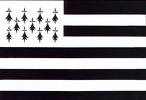
I wish to thank all from Cornwall who sponsored the recent relay race (Ar Redadeg) round Brittany in aid of the Diwan (Breton speaking) schools. There were six hundred laps from Nantes to Carhaix, and every runner was sponsored for about £75. Sponsors included many councils and businesses, the Diwan schools, some European minority groups like the Basques, some Celtic Groups like the Breton/Welsh Group but also Cornwall. Two runners were sponsored with Cornish money, Riwana and Talwyn Trevenen Baudu who are half Breton and half Cornish. They ran wearing Cornish T shirts and carrying Cornish flags. It was moving to see Breton and Cornish flags together when the race crossed over the bridge at Plougastel.
A large amount of money was raised in Cornwall so the surplus was given to Lise Diwan at Carhaix. This is the only post-15 lycee for Breton-speaking students. The balance was presented at a public concert in Le Relecq Kerhuon, Brest, by myself, to one of the teachers in the lycee, with a Cornish greeting, translated into Breton by my grand-daughter. The total raised altogether was 1050 euros, a staggering amount.
Thank you to all who contributed, whether family, friends, bards or organisations, and in particular, Gorseth Kernow, the Celtic League and the Cornish branch of the Celtic Congress. The donations provided strong evidence of Celtic solidarity and support for another Celtic culture and language. It has made Cornwall many friends.
I hope that when the standard written form of Cornish is fully implemented, something as inspiring as this race over a long distance could be emulated by us in Cornwall to raise funds for the Cornish language. The organisation was huge but the goodwill towards the Breton language was evident among the whole population. Well done Kernow for supporting so generously such an imaginative enterprise. Thank you.
Ann Trevenen Jenkin, Past Grand Bard, Life President of the Celtic Congress. Fundraiser in Kernow.
( Ann Trevenen Jenkin, An Gernyk, Fordh an Chapel, Leedstown, Hayle TR27 6BA. tel: 01736-850332.for further information or interviews, photographs etc.)
If you look a the website for Ar redadeg you can find hundreds of photos of the race. Go onto the site and choose fotoiou at the top. Talwyn and Riwana were running on the Daoulas-Montroulez bit, and there are lots of photos.Talwyn's are numbers 0263, 0264 and 0267; Riwana's are on page 4. 0287, 0288, 0289 and 0291. There are a few others where you can see the big Cornish flag. I also have some photos myself.)
Support given for Breton Language Schools
I wish to thank all from Cornwall who sponsored the recent relay race (Ar Redadeg) round Brittany in aid of the Diwan (Breton speaking) schools. There were six hundred laps from Nantes to Carhaix, and every runner was sponsored for about £75. Sponsors included many councils and businesses, the Diwan schools, some European minority groups like the Basques, some Celtic Groups like the Breton/Welsh Group but also Cornwall. Two runners were sponsored with Cornish money, Riwana and Talwyn Trevenen Baudu who are half Breton and half Cornish. They ran wearing Cornish T shirts and carrying Cornish flags. It was moving to see Breton and Cornish flags together when the race crossed over the bridge at Plougastel.
A large amount of money was raised in Cornwall so the surplus was given to Lise Diwan at Carhaix. This is the only post-15 lycee for Breton-speaking students. The balance was presented at a public concert in Le Relecq Kerhuon, Brest, by myself, to one of the teachers in the lycee, with a Cornish greeting, translated into Breton by my grand-daughter. The total raised altogether was 1050 euros, a staggering amount.
Thank you to all who contributed, whether family, friends, bards or organisations, and in particular, Gorseth Kernow, the Celtic League and the Cornish branch of the Celtic Congress. The donations provided strong evidence of Celtic solidarity and support for another Celtic culture and language. It has made Cornwall many friends.
I hope that when the standard written form of Cornish is fully implemented, something as inspiring as this race over a long distance could be emulated by us in Cornwall to raise funds for the Cornish language. The organisation was huge but the goodwill towards the Breton language was evident among the whole population. Well done Kernow for supporting so generously such an imaginative enterprise. Thank you.
Ann Trevenen Jenkin, Past Grand Bard, Life President of the Celtic Congress. Fundraiser in Kernow.
( Ann Trevenen Jenkin, An Gernyk, Fordh an Chapel, Leedstown, Hayle TR27 6BA. tel: 01736-850332.for further information or interviews, photographs etc.)
If you look a the website for Ar redadeg you can find hundreds of photos of the race. Go onto the site and choose fotoiou at the top. Talwyn and Riwana were running on the Daoulas-Montroulez bit, and there are lots of photos.Talwyn's are numbers 0263, 0264 and 0267; Riwana's are on page 4. 0287, 0288, 0289 and 0291. There are a few others where you can see the big Cornish flag. I also have some photos myself.)
Subscribe to:
Posts (Atom)



.jpg)